
The
Current Issue:
August 5th & 19th, 2006 and In-Store Discovery
Can be downloaded by clicking on the Wine Bottle:


Last Month's Issue:
July 8th & 22nd, 2006 and In-Store Discovery
-. for the newsletter click
here
-. for the summary of the July 8th release click
here
-. for the summary of the July 22nd release click
here
June 10th & 24th, 2006 and In-Store Discovery
-. for the newsletter click
here
-. for the summary of the June 10th release click
here
-. for the summary of the June 24th release click
here
May 13th & 27th, 2006 and In-Store Discovery
-. for the newsletter
click
here
-. for the summary of the May 13th release click
here
-. for the summary of the May 27th release click
here
April 1st, 15th & 29th, 2006 and In-Store Discovery
-. for the newsletter click
here
-. for the summary of the April 1st release click
here
-. for the summary of the April 15th release click
here
-. for the summary of the April 29th release click
here
March 4th & 18th, 2006 and In-Store Discovery
-. for the newsletter click
here
-. for the summary of the March 4th release click
here
-. for the summary of the March 18th release click
here
February 4th & 18th,
2006 and In-Store Discovery
-. for the newsletter click
here
-. for the summary of the February 4th release click
here
-. for the summary of the February 18th release click
here
January 7th & 21st, 2006 and In-Store Discovery
-. for the newsletter click
here
-. for the summary of the January 7th release click
here
-. for the summary of the January 21st release click
here
December 10th, 2005 and In-Store Discovery
-. for the newsletter click
here
-. for the summary of the December 10th release click
here
-. for the summary of the Vintages Essentials Collection items click
here
November 12th & 26th, 2005 and In-Store Discovery
-. for the newsletter click
here
-. for the summary of the November 12th release click
here
-. for the summary of the November 26th release click
here
October 15th & 29th, 2005 and In-Store Discovery
-. for the newsletter click
here
-. for the summary of the October 15th release click
here
-. for the summary of the October 29th release click
here
September 17th & October 1st, 2005 and In-Store Discovery
-. for the newsletter click
here
-. for the summary of the September 17th release click
here
-. for the summary of the October 1st release click
here
August 20th & September 3rd, 2005 and In-Store Discovery
-. for the newsletter click
here
-. for the Burgundy 2002 notes click
here
-. for the summary of the August 20th release click
here
-. for the summary of the September 3rd release click
here
July 23rd & August 6th, 2005 and In-Store Discovery
-. for the newsletter click
here
-. for the summary of the release click
here
June 25th & July 9th, 2005 and
In-Store Discovery
-. for the newsletter click
here
-. for the additional tasting notes click
here (updated
Jun. 22, 2005)
-. for the summary of the release click
here
May 28th & June 11th, 2005 and In-Store Discovery
-. for the newsletter click
here
-. for the summary of the release click
here
April 30th & May 14th, 2005 and
In-Store Discovery
-. for the newsletter click
here
-. for the summary of the release click
here
April 2nd & 16th, 2005 and
In-Store Discovery
-. for the newsletter click
here
-. for the summary of the release click
here
March 5th & 19nd, 2005
and In-Store Discovery
-. for the newsletter click
here
-. for the summary of the release click
here
February 5th & 19nd, 2005 and
In-Store Discovery
-. for the newsletter click
here
-. for the additional tasting notes click
here (updated
Feb. 10, 2005)
-. for the summary of the release click
here
January 8th & 22nd, 2005 and
In-Store Discovery
-. for the newsletter click
here
-. for the additional tasting notes click
here (updated
Jan. 12, 2005)
-. for the summary of the release click
here


Welcome To the Vintage Assessments Subscriber Area
You have now logged onto the Subscriber-Only area of the Vintage Assessments web site. From here you can access the various special resources as a Vintage Assessments subscriber.
August 5 & 19, 2006 Issue
of
Vintage Assessments
is now available.
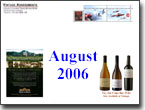
click
here to download
Monthly
Summarized Buying Guide
August 5, 2006 Release
Buying Guide
Click
here to
download
The newsletters are in Adobe PDF format.
To view them, You must have Adobe Acrobat Reader installed on your system.
To download it just click on the icon below:

The Art of Tasting: Numbers vs. Stars
By Michael Vaughan
In an ideal comparative evaluation every wine is tasted blind and beside one another, all at the same time and identical INO glasses grouped by appropriate flights of similar wines. Ideally they should be retasted several hours later allowing them to evolve over time to see how they develop - to see which collapse and which improve. Professional tasters admit that a wine can change quite markedly as it breathes. In addition, a second bottle should be tasted preferably in a different order to ensure that the first sample was fit and that the grade assigned correct. Unfortunately, these tasting conditions rarely, if ever, exist making most evaluations tenuous at best. As a result, one must distrust the absolutism of the numbers that are used with so much ease by many wine writers. In fact, I believe it's almost impossible to try a score wines, point for point, at tastings, which are held under totally different conditions and days or even weeks apart. And yet this is what usually happens!
There are other pitfalls in the numbers game. Numeric scoring systems do not account for price and/or drinkability! They attempt to break a wine down into components to which a number can be objectively assigned. An example might be as follows:
|
This is neat intellectually. I still use numeric scoring systems for competitive tasting sessions - except that my 100-point system makes no allowance for appearance or colour! It was Robert Parker who made the 100-point number system famous! Why? Not only because of the great acuity of Parker's palate. Parker's unusual "10- point" scoring system made wine advertisers jump for joy. All of a sudden wines were attaining scores in the 80's and 90's - grades which were previously unheard of! Few mention that his system starts at a base of 50 points! In Parker's own words: "the most repugnant of all wines will still get 50 points!" So it isn't really a 100-point system! Parker also states "any wine rated 90 or above will be outstanding for its particular type." Unfortunately, this isn't true. In the Wine Times, Parker admits that his system is 'essentially a 40 point system with 10 points thrown on top to take account of the ability to age!' Parker adds that the best Gamay Beaujolais in the world couldn't score more than 90 points! Why? "Because it's not fair to the reader to equate a Beaujolais (even if perfect) with a 1982 Mouton Rothschild."
This is grape chauvinism taken to its extreme ~ forcing the Gamay to compete against the world's greatest Cabernet Sauvignon as opposed to other wines in the same class! Aging potential is the key factor that gets a wine into the 90's and, unfortunately, it is exactly this quality that makes many of Parkers high scoring wines so undrinkable at least for the moment! Parker's numeric system does not account for drinkability! The high numbers simply tell you what to lay away which you can only hope will be enjoyable at some point in the future. Parker readers know this, but the average wine buyer doesn't! When Parker admits that "reading is a lost skill in America" and that a "certain segment ... only look at numbers" then the folly of buying wines to drink today on numbers alone should become self evident! Even worse is the fact that most wine journalists have adopted this high scoring system in order to make their scores compatible with those of Parker or the Wine Spectator. In this scramble for numbers, the essence of what wine is all about has been lost. People know more about the scores than what the wine actually tastes like!
Recognizing that no system is perfect, I use the following three star rating. The advantage is that it forces the readers to look at the tasting notes and decide which *** best suits their palate - not simply buy the 94 over the 93 because it got a higher score! This eliminates the problem of justifying the perfect Gamay, which would get 100 points! I am not alone in using stars ~ many respected critics also use stars. Hugh Johnson's Pocket Encyclopedia now uses up to 4 stars (it used to be five) where a one star wine is "plain, everyday quality!" Italian wine reviewer Burton Anderson also uses four stars where his one star is "an everyday wine." In contrast, Roger Voss in his Pocket Guide to Chardonnay who also uses four stars says his one star is "below average quality." There is no uniformity!
|
|
So what should I buy to drink today? This is what most readers want to know. They also want good value. Stars like numbers say nothing when it comes to value and drinkability - they only determine the "objective" quality of the wine. To answer these questions I have imposed my own set of opinions on the scores presented. This combines quality & stylistic typicity as well as drinkability and value for money. Designations like Best Buy, Recommended or Release Highlight are self-evident. The Explorer's Selection suggests that wine is worth trying but that its flavours, style and/or price are such that it may not appeal to everyone. Try a bottle first! The food that accompanies a wine, as well as the configuration of the glass, can change the wine's "objective" rating and enjoyment. In essence, the only thing that matters is if this rating system works for you as a useful buying tool.
Of course, all scoring systems are subject to limitations. There is no question that an inert wine lab can cause a perfectly decent wine to loose some of its appeal! The joy of a pleasant glass of wine is often related to the surroundings, the company and, of course, the food. Standing in the lab in front of sixty naked bottles diminishes that magic. Nevertheless, it is this experience, which enables the taster to concentrate on the comparative flavours, styles and intensities different wines have to offer.
Consistency is everything. Experts confirm that at least 5% of all wines will, to some degree, be flawed due to cork problems! Unfortunately, in some instances, it is very difficult to tell whether the disappointment in the glass reflects a poorly made wine or a corky wine. To check this out, I try to return to the wine lab to repeat my four+ hour preview tastings. In these repeat tastings, I have discovered that the one in twenty rule-of-thumb is fairly accurate. This means that 5% of the all readers may be unhappy with one of my recommendations, not because it was necessarily wrong, but because of bottle variation! This is a frightening statistic, especially if I happen to base my rating on the one bad bottle in the batch! If you believe that a wine is faulty (and I mean flawed and not simply something that you don't happen to like), you should feel no hesitation in returning it to the LCBO for credit and analysis.
The Shape of the Wine Glass Change the Score!
When it comes to the glass itself, different configurations will make the identical wine taste and score differently! To overcome this problem, I only use the standard INO glass for all my tastings. If you do not do use the identical glass, you cannot compare tasting notes! And here's a great hint. If you have a special wine, select several different glasses and pour a little into each to see which makes the wine taste best to you! That is the glass to use.
In summary, wine evaluation attempts to objectify something that really depends upon current convention and taste. Personal biases should be recognized for what they are. A wine isn't "bad" because you don't like. You simply don't like the characteristics that it has. Numbers are only a guide to quality, an ever-changing guide. My role as a critic is to provide you with a consistent set of qualitative tasting notes and then give you with my opinion as to whether I believe that wine is worth drinking.
Copyright
Food & Beverage Testing Institute of Canada 2006
Prior written permission is required for any form of reproduction
(electronic or other wise) and or quotation.
Contact Michael Vaughan at
mbv@total.net